Retaining walls, grading & drainage in Conover and Hickory
A wall holds a slope because of what's behind and under it. Free estimates across Catawba County.
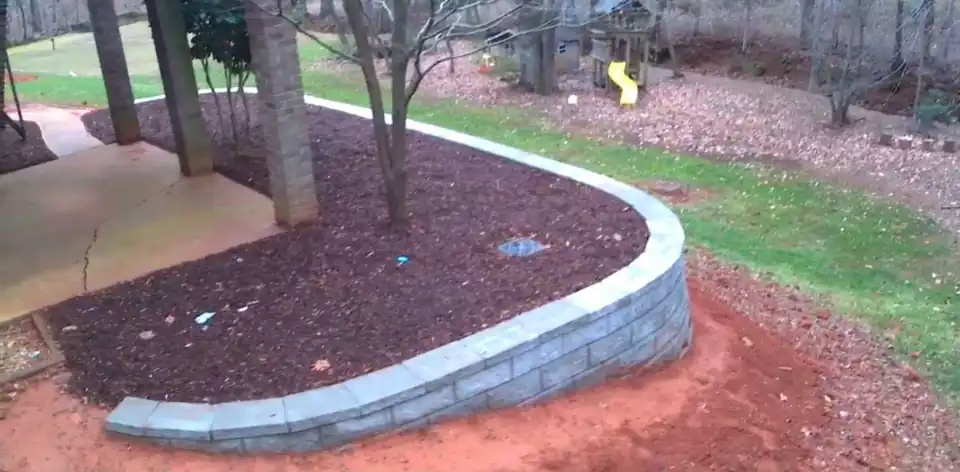
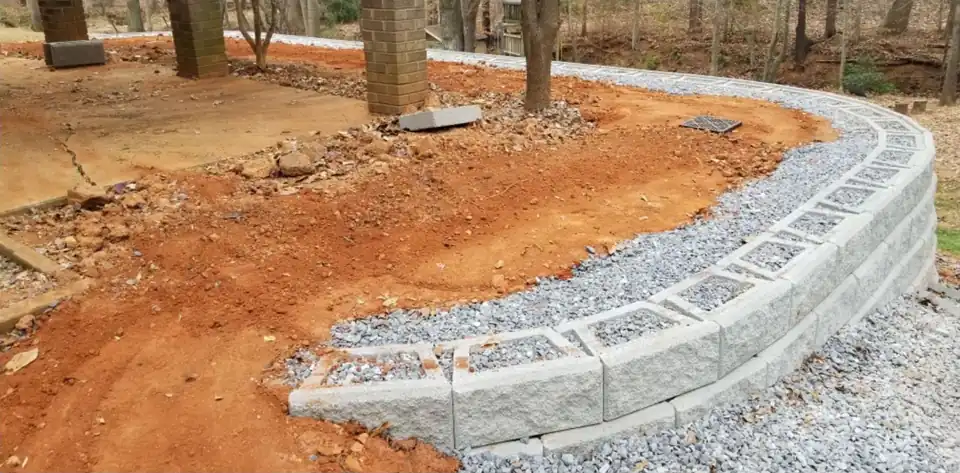
A retaining wall is holding back a hill that wants to come down. Dirt is heavy, and wet dirt is heavier. When a wall leans, bulges or cracks, it almost always comes down to one of three things: no real base under the first row of block, nothing behind the wall to let water out, or a wall built taller than its construction can carry.
We build segmental block walls the way the block is meant to go in. The first course sits on a compacted gravel base, set below grade so the wall isn't sitting on loose topsoil. Drainage stone goes in behind the block as the wall goes up, so water drains down through it instead of pushing against the back. Where the water needs somewhere to go, a drain line carries it out.
The photo at the top shows it. Before the backfill and mulch went in, you could see the crushed stone behind that wall. Once it's finished, nobody sees it again. That's the part we don't skip.
What we build
Retaining walls
Block walls for slopes, raised beds and level spots in a hilly yard.
Raised pads and terraces
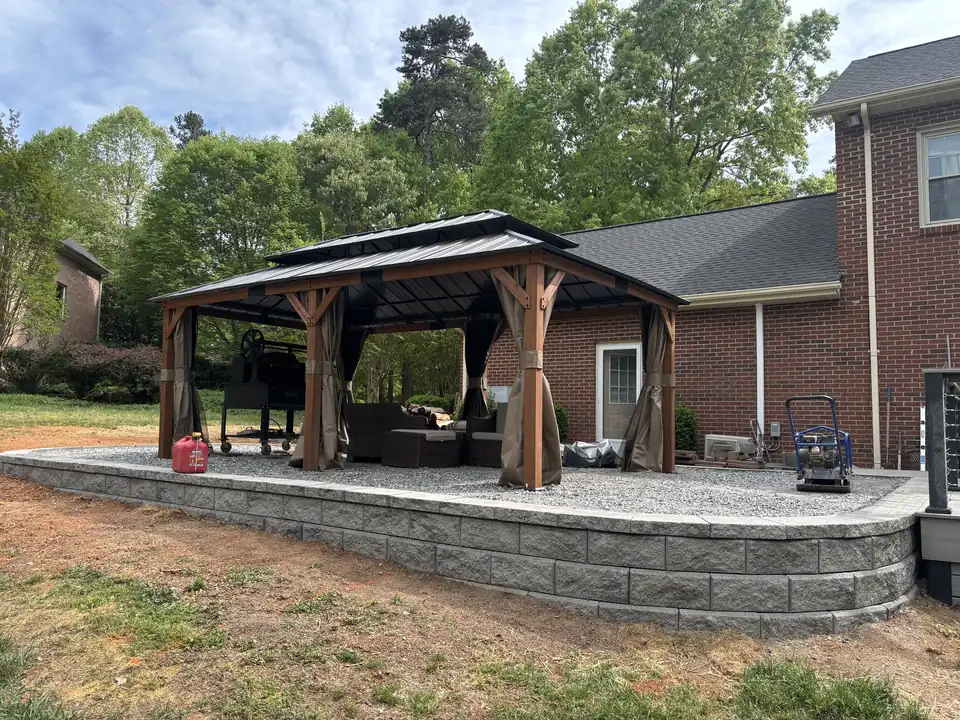
Level ground for a patio, gazebo or play area, held up by a wall.
Tree rings and bed walls
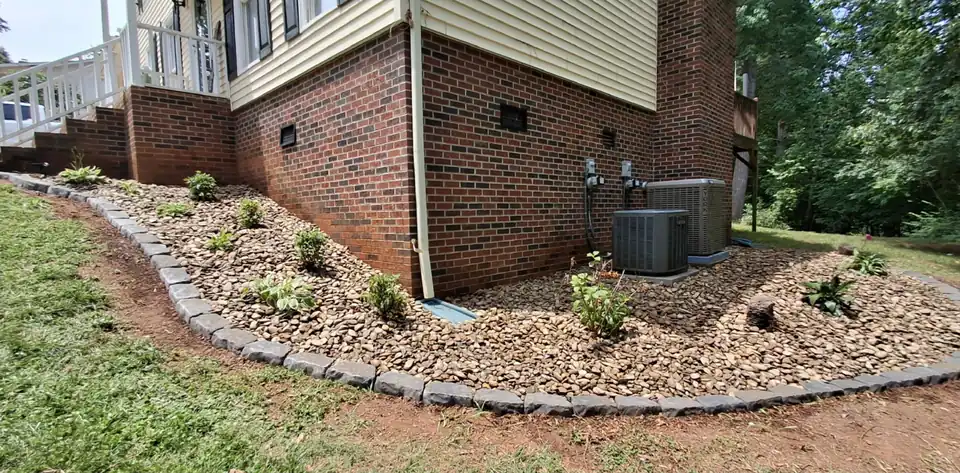
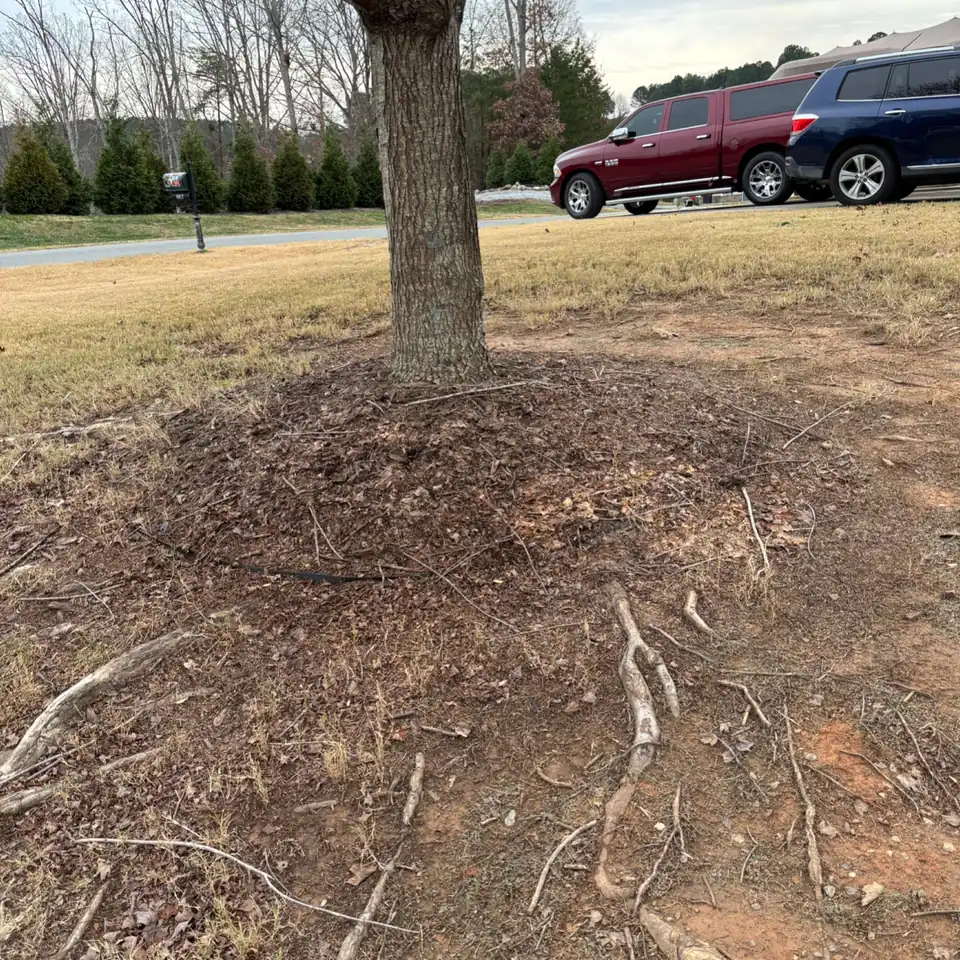
Short curved walls around trees and beds that keep soil and mulch where they belong. We can plant the beds too.
Grading
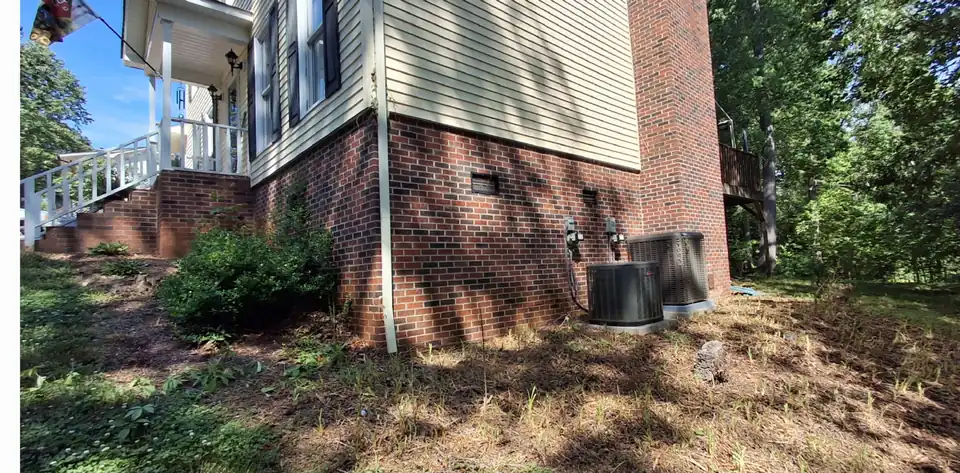
Reshaping the ground so it falls away from the house and water runs where it should.
Drainage
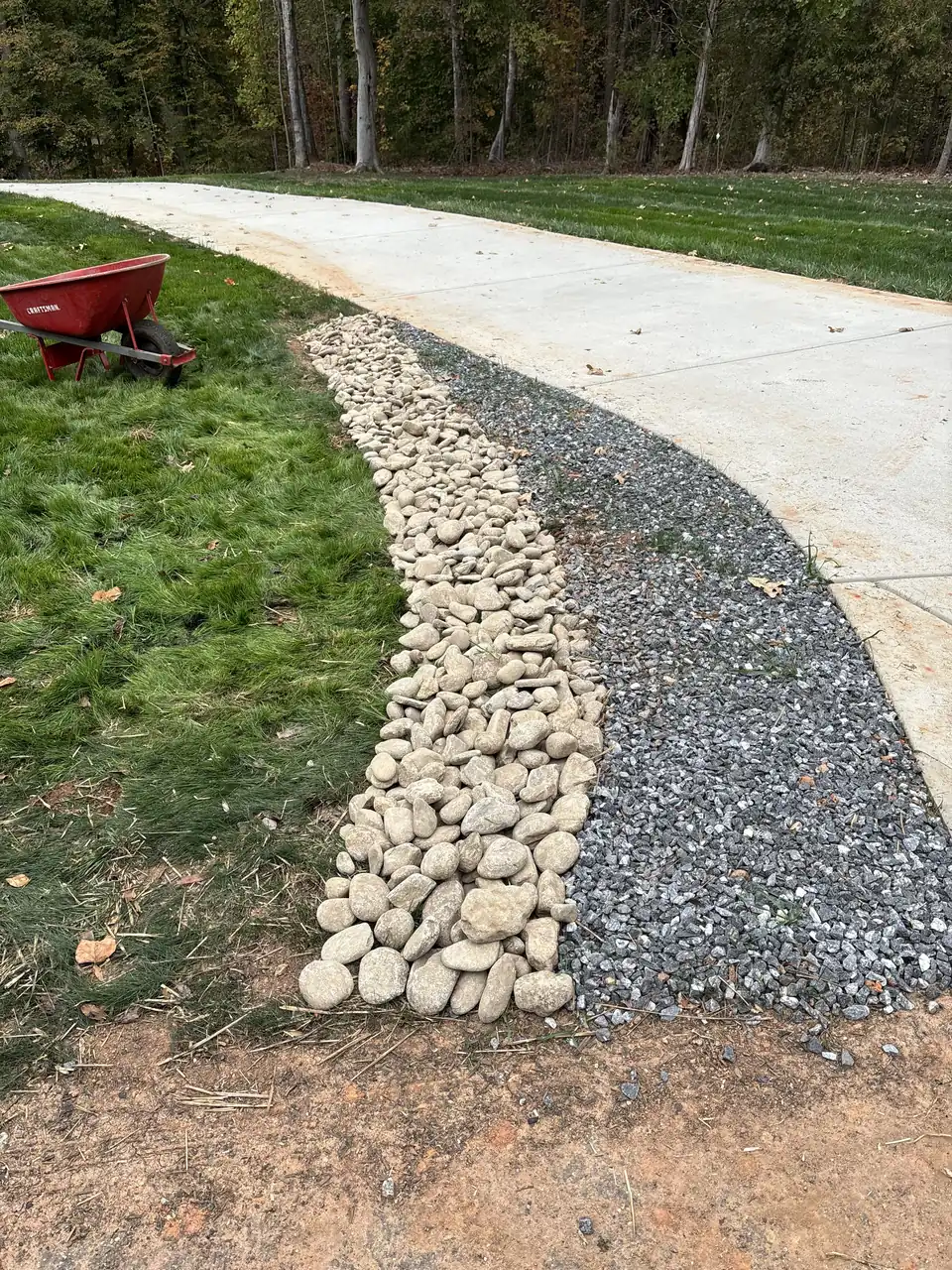
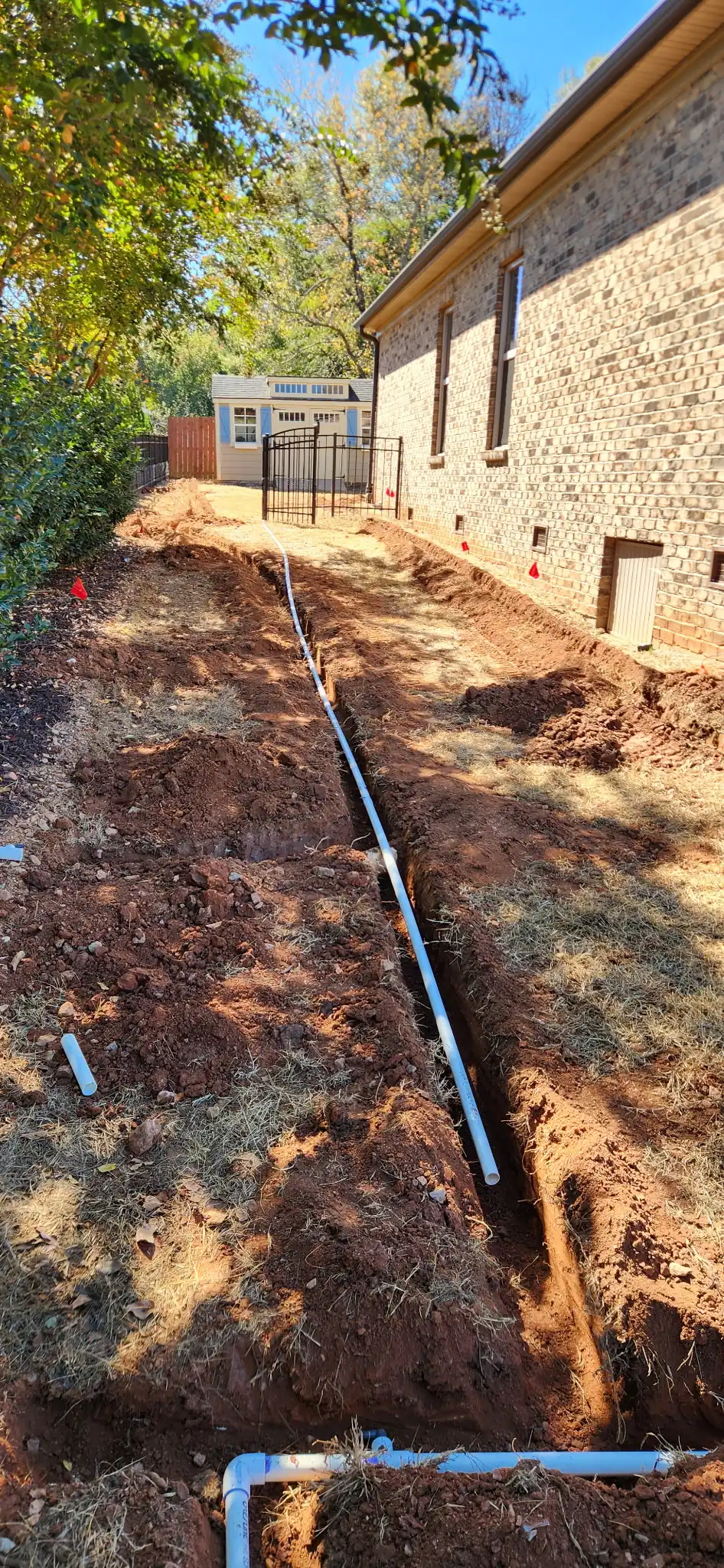
Dry creek beds, drain lines and rock channels for yards where water pools or washes out.
How a wall goes in
Dig the trench
Below grade, down to firm ground, and wide enough for the base and the block.
Compact the base
Crushed stone, leveled and compacted. The first course carries everything above it, so it gets the most time.
Stack and backfill
Each course is set and checked. Drainage stone goes in behind as the wall goes up, not after.
Cap and finish
Caps set, soil and mulch or sod brought back up to the wall, and the site cleaned up.
Walls and drainage we've built
Tree rings
 Before
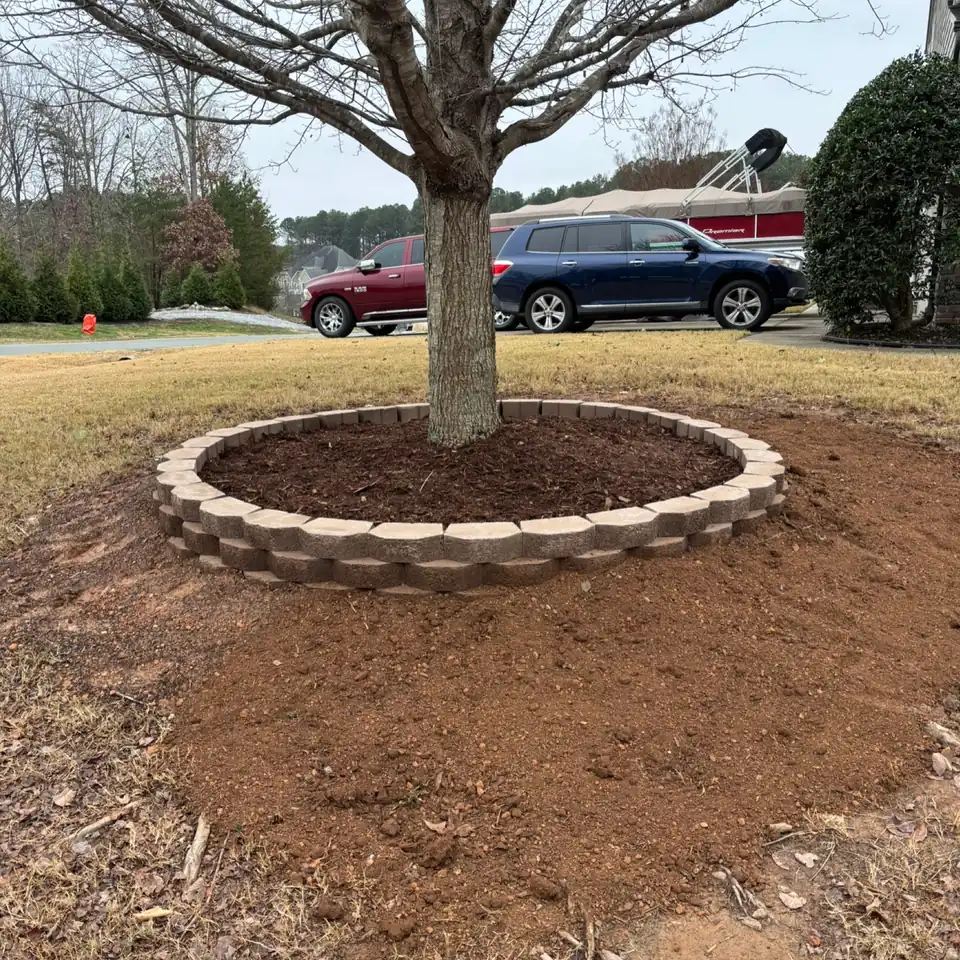 After
After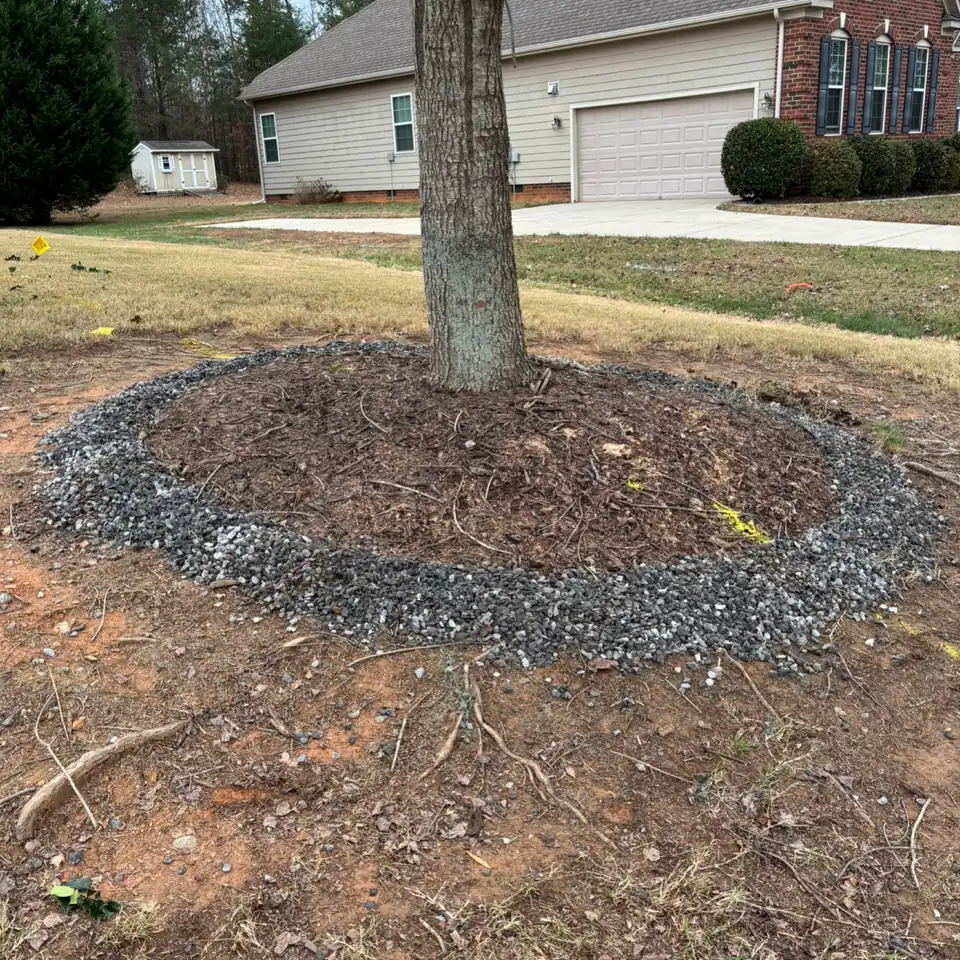 Base
Base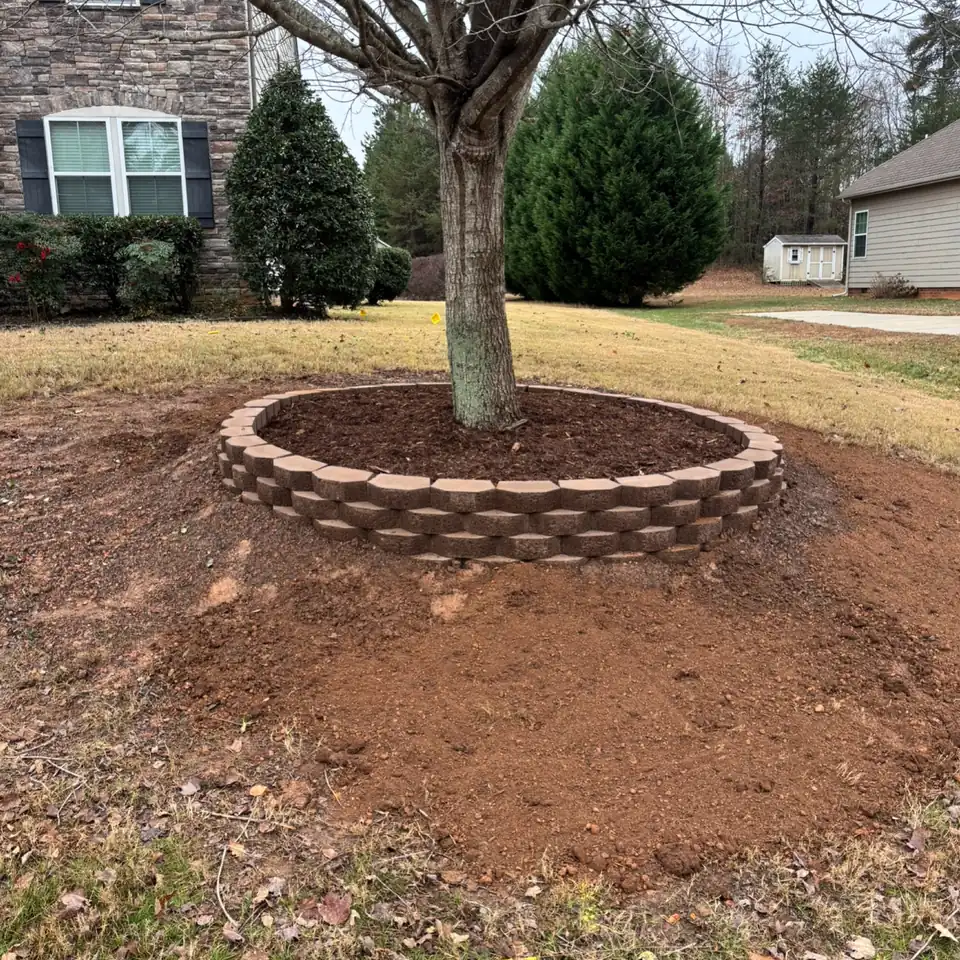 Finished
Questions we get
How tall of a wall can you build?
It depends on the slope, the soil and what sits above the wall. Taller walls need more engineering, and some need a permit or an engineer's design. We'll tell you straight at the estimate what your wall needs.
Why does drainage behind the wall matter so much?
Water in the soil behind a wall pushes on it. Give that water a way out, through drainage stone and a drain line where it's needed, and the wall only has to hold back dirt.
Can you fix a drainage problem without building a wall?
Yes. A lot of yards just need regrading, a dry creek bed or a drain line to move water away from the house.
Can you replace an old timber wall?
Yes. We'll pull the old wall, fix whatever let it fail, and build the new one on a proper base.
Do you give free estimates?
Yes. Estimates are free in every town we serve, from Hickory, Conover and Newton out to Sherrills Ford, Denver, Taylorsville and Granite Falls. Quality Greens is insured, with more than 10 years in the trade.
Got a slope that won't behave?
We'll come look at it. The estimate is free.