Patios, walkways & fire pits in Conover and Hickory
Built on a dug-out, compacted base so it stays flat and drains. Free estimates across Catawba County.
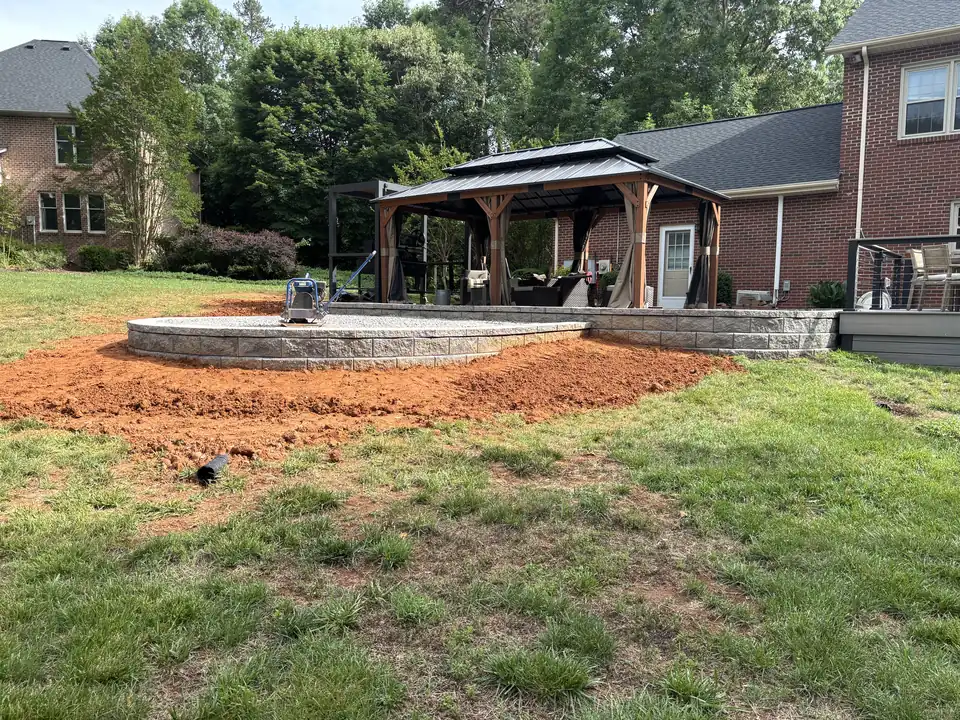
The top is the easy part.
A patio is something you'll walk on, grill on and pull chairs across for a long time. What you see on top, the pavers or the stone, is the easy part to get right. Whether it stays flat is decided underneath: how far down the ground was dug, how the base was compacted, and where the water goes when it rains.
Most patios that fail around here fail the same way. Our red clay holds water. The base was too thin, or it was dumped in all at once and never compacted. A couple of winters later the pavers dip, rock underfoot, or push up at the edges. The only real fix is pulling it up and starting over.
We'd rather do it once. Every patio, walkway and fire pit we build starts with the same base work, whether it's a small landing by the back door or a full outdoor living area. When the patio's done, we can plant and mulch the beds around it.
What we build
Paver patios
Back patios, side patios and pads for a grill or table. Laid in the pattern you pick and pitched away from the house.
Walkways
Paver, gravel or stone paths from the driveway to the door or out to the back yard. Edged so the path keeps its shape.
Paver driveways
A driveway carries a truck, not just feet. The base goes deeper and gets compacted harder to match the load.
Fire pits and fireplaces
Built from block or stone on the same compacted base as a patio, with room around it for chairs.
Gravel pads
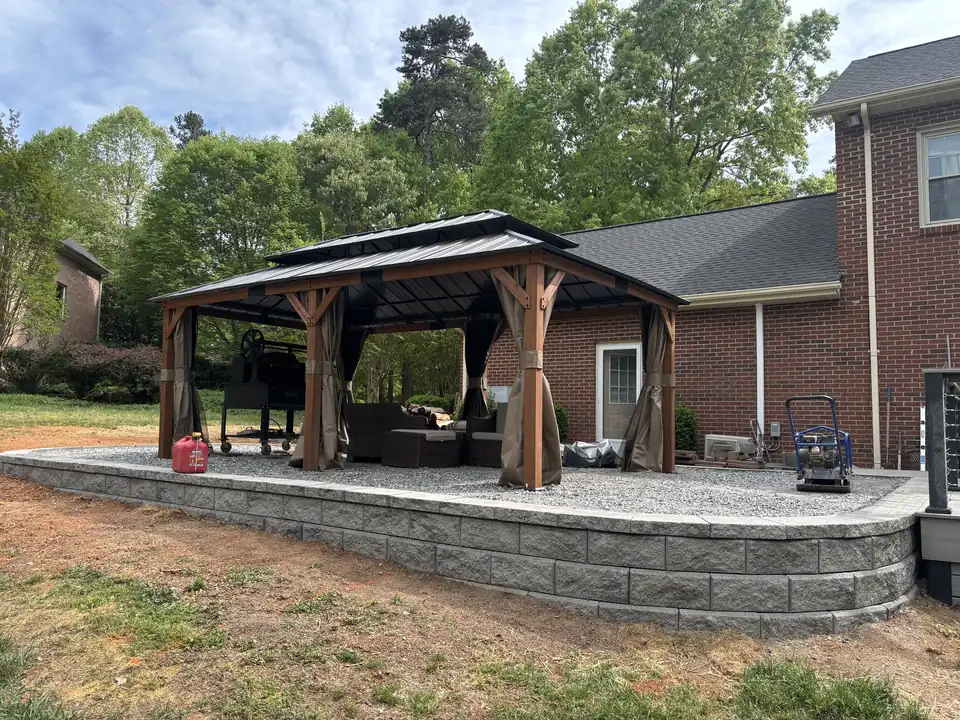
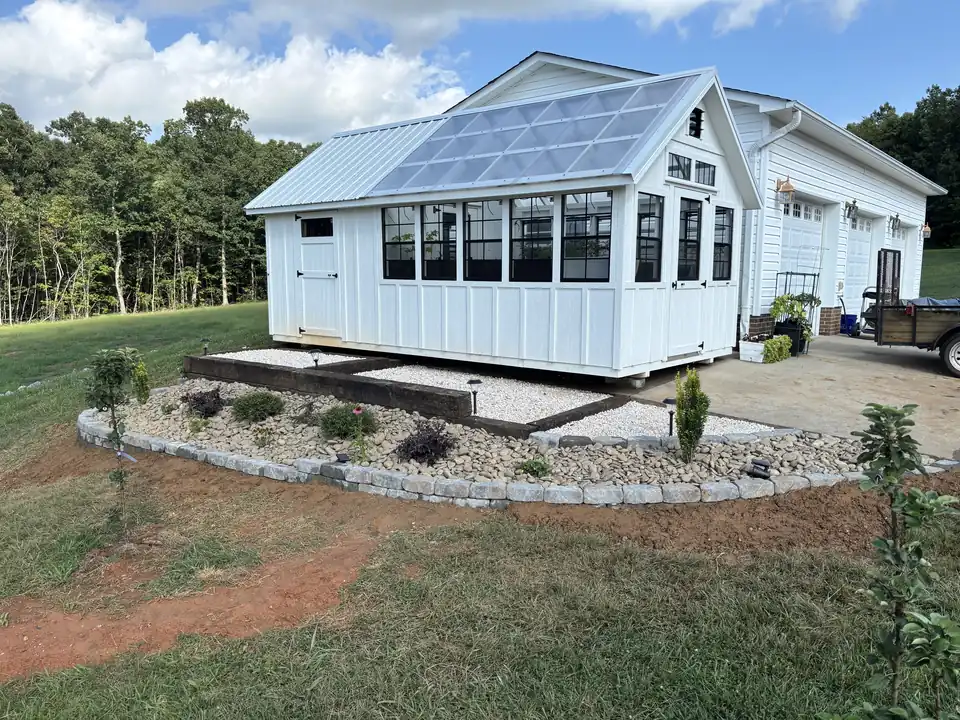
Level pads for a shed, gazebo or hot tub, held in with block or timber so the gravel stays put. On a slope, the pad sits on a retaining wall.
Drainage built in
Every surface is pitched so water runs off and away. If the yard needs more than that, we plan grading and drainage before we dig.
How a patio goes in
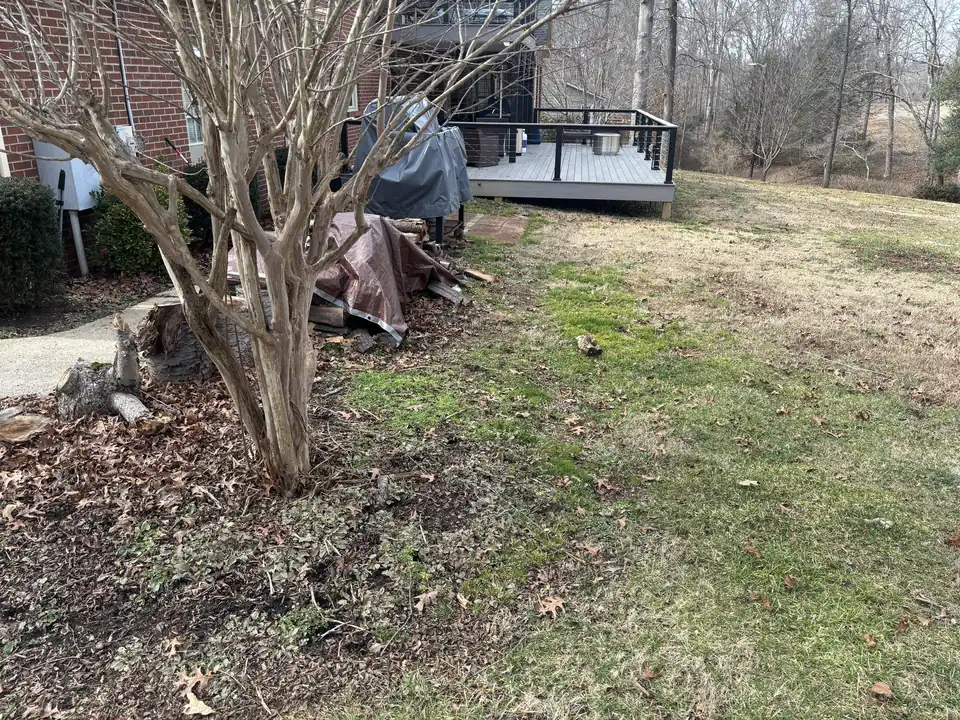
Walk it and mark it
We look at the slope, where water runs now, and how you'll use the space. Then it gets marked out on the ground.
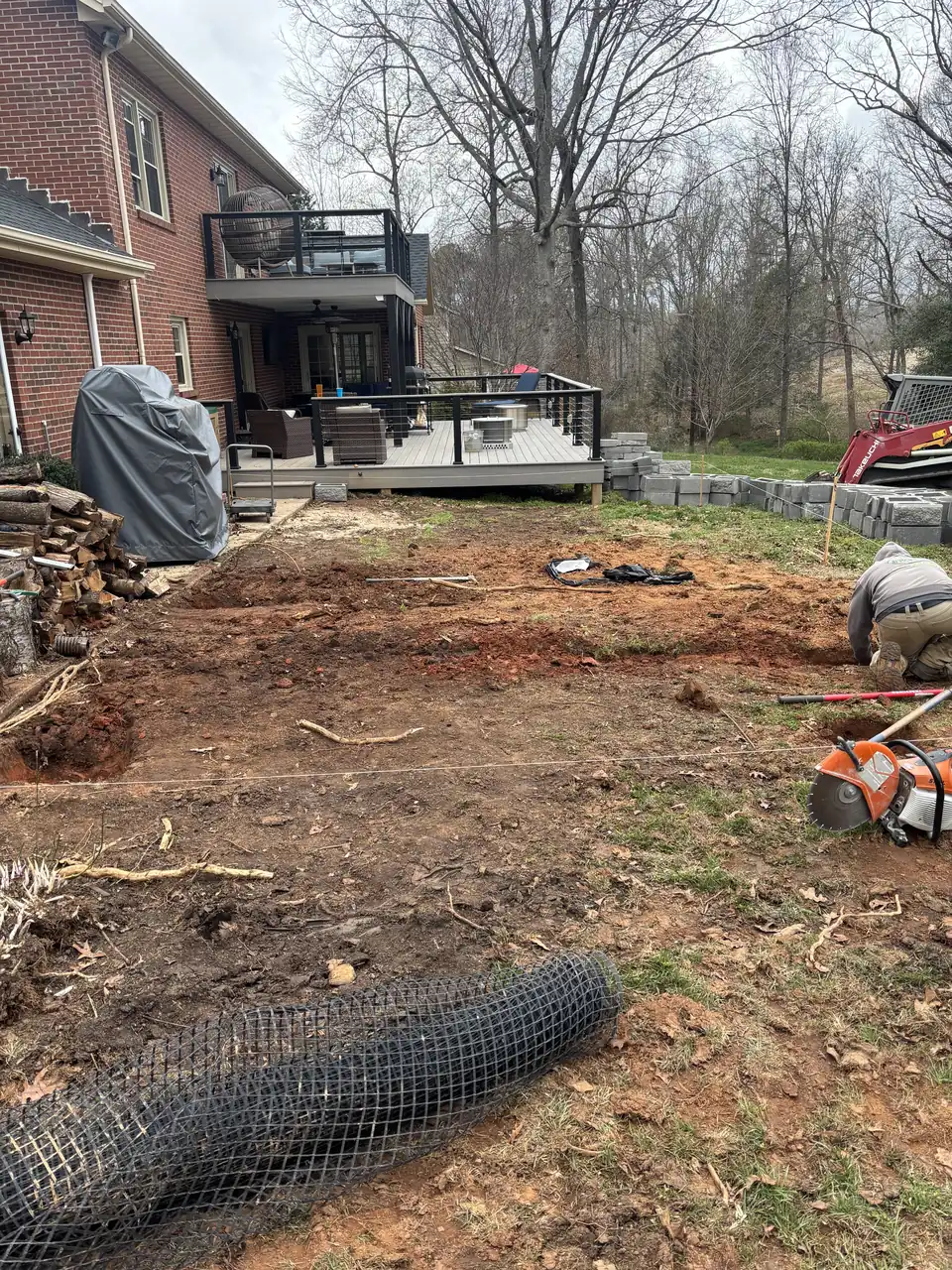
Dig to firm ground
Sod and soft topsoil come out. We dig down to ground that won't settle under the weight.
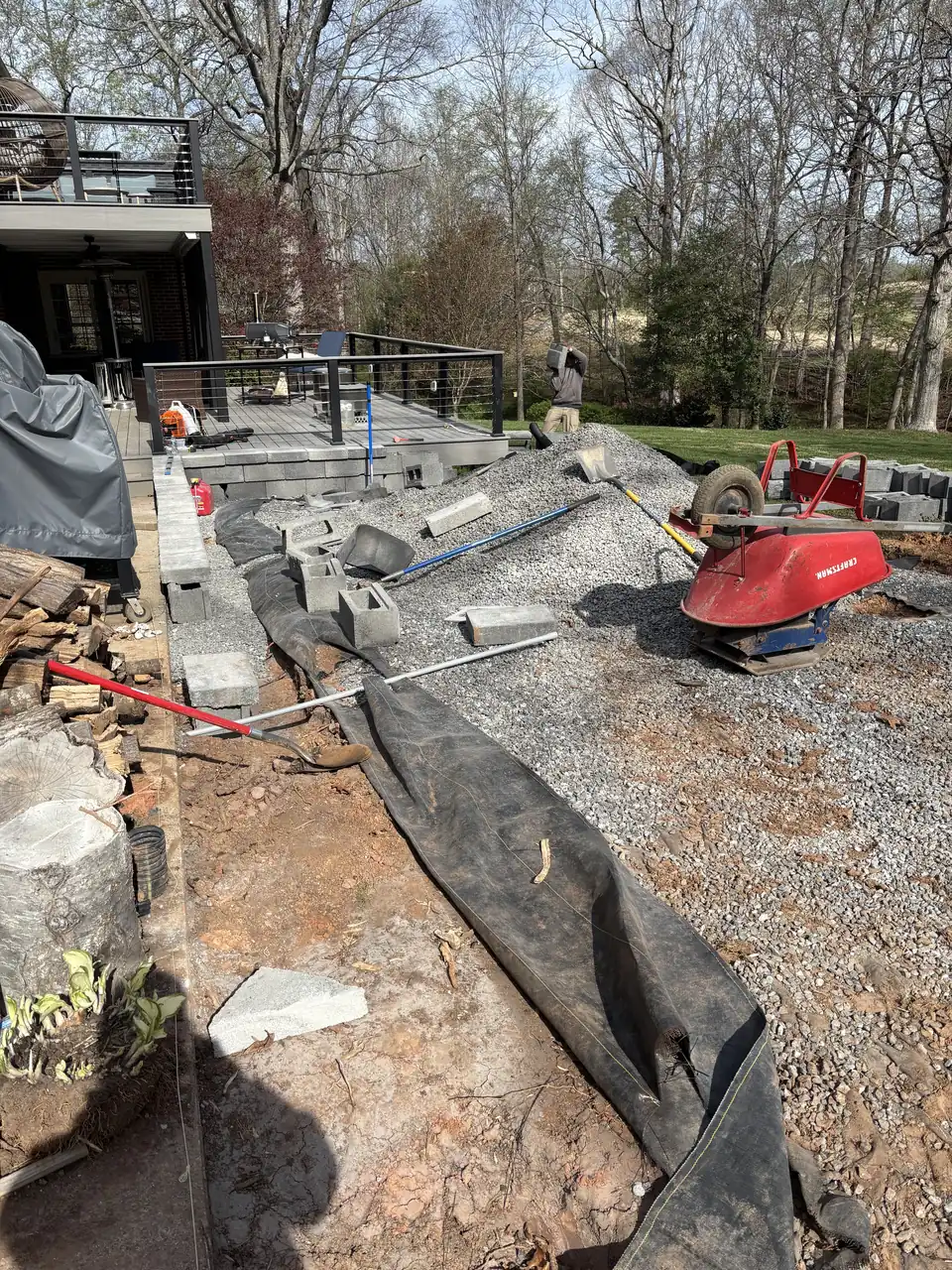
Build the base in layers
Crushed stone goes in a layer at a time, and each layer is compacted before the next goes down.
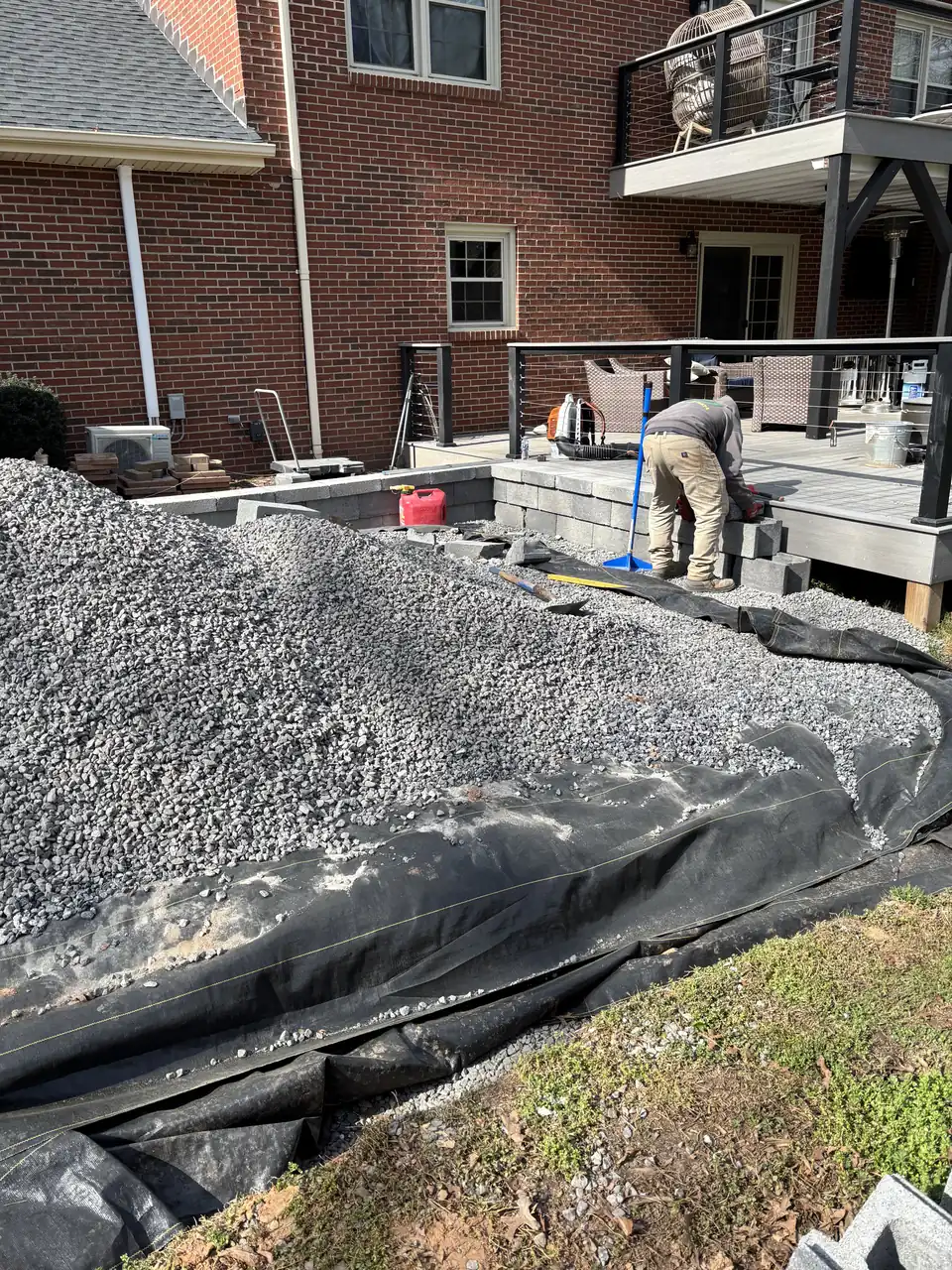
Set, edge and lock
A screeded bedding layer, pavers or stone set to a string line, joint sand swept in and compacted, and dirt backfilled and packed against the edges, then seeded and strawed so the lawn grows back up to the patio.
Clean up
We haul off what we dug out, blow off the drive and walks, and leave the yard neat.
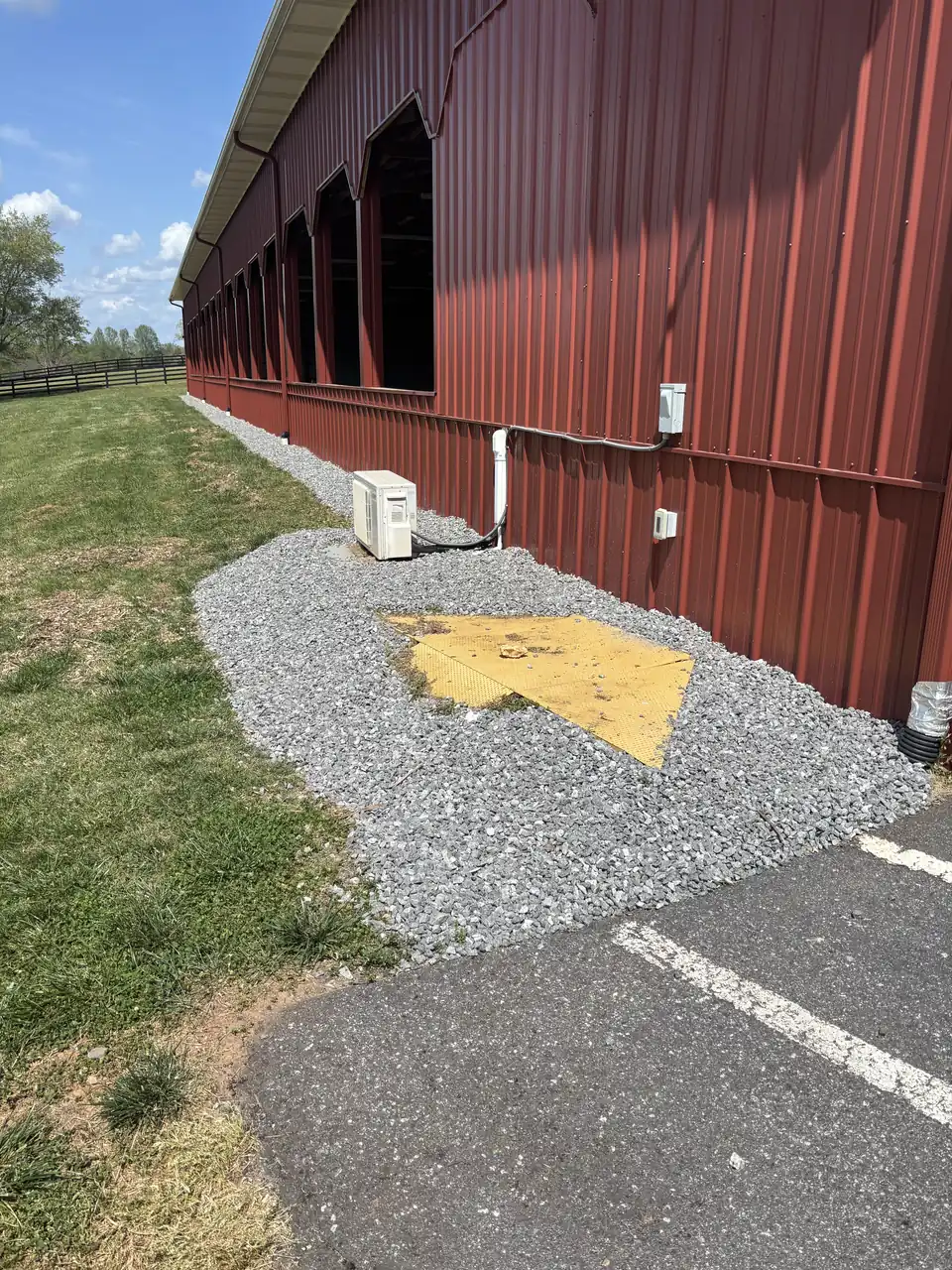
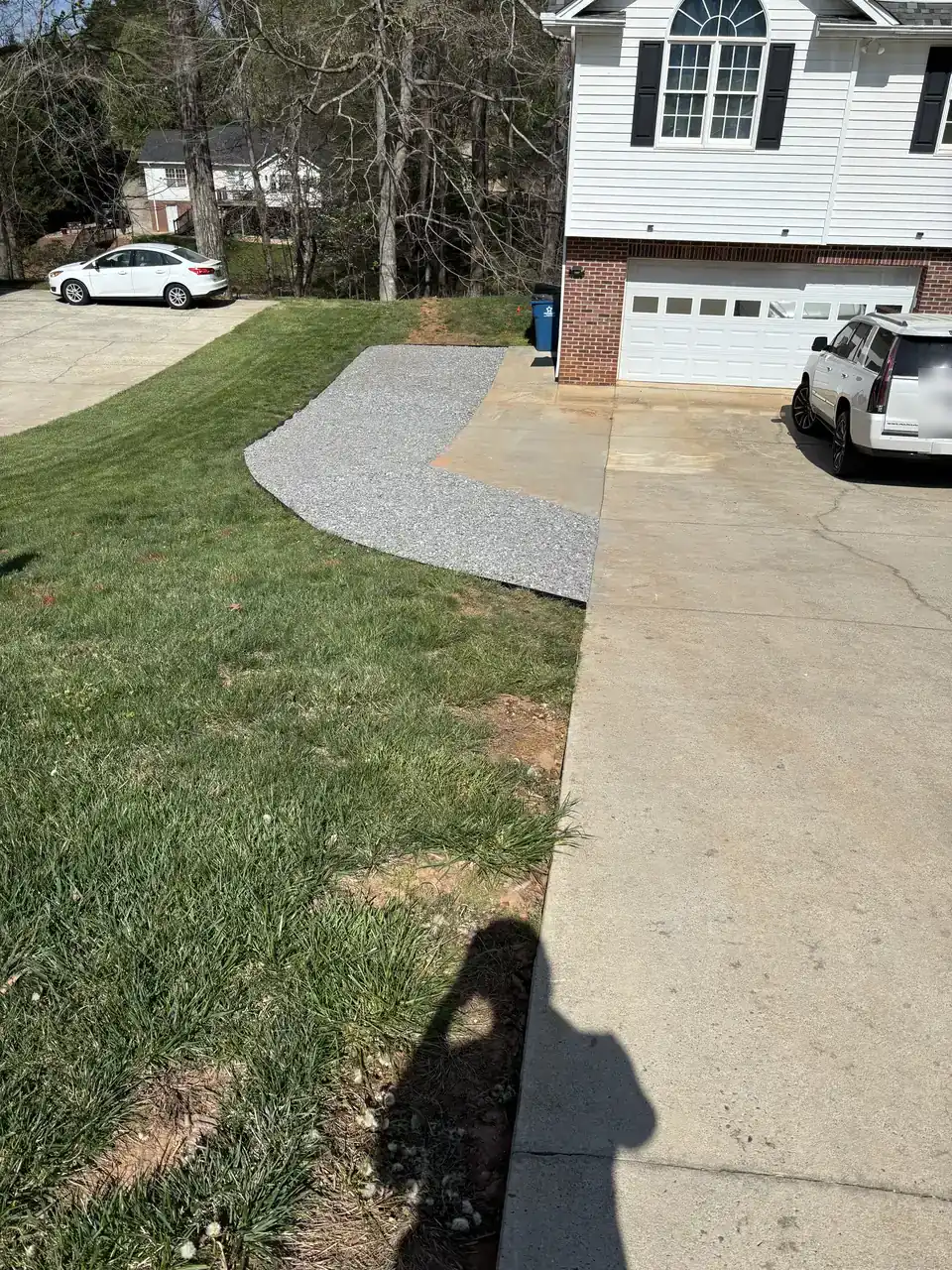
All five photos are from one job: a raised patio pad with a block wall.
Recent work
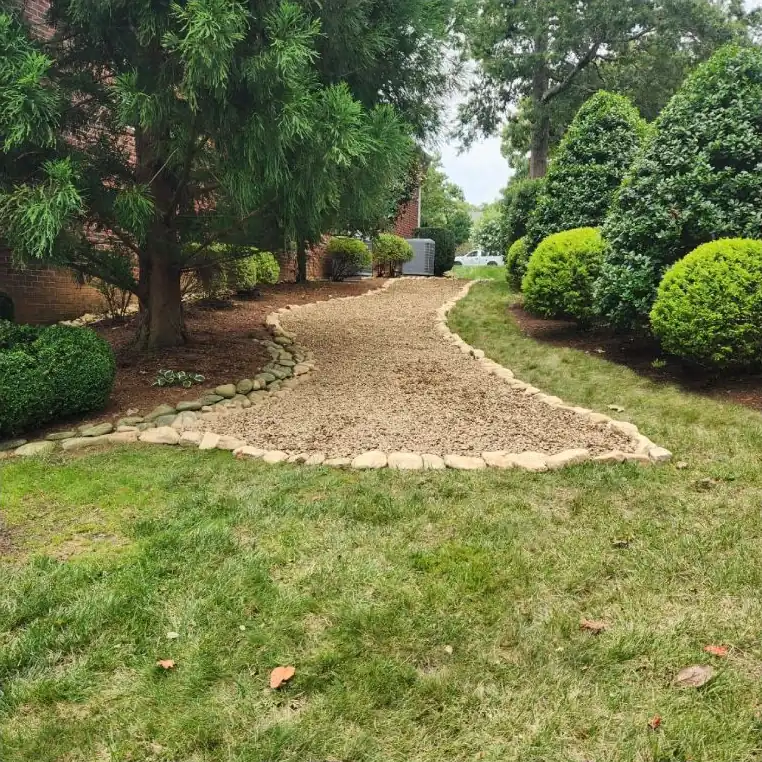
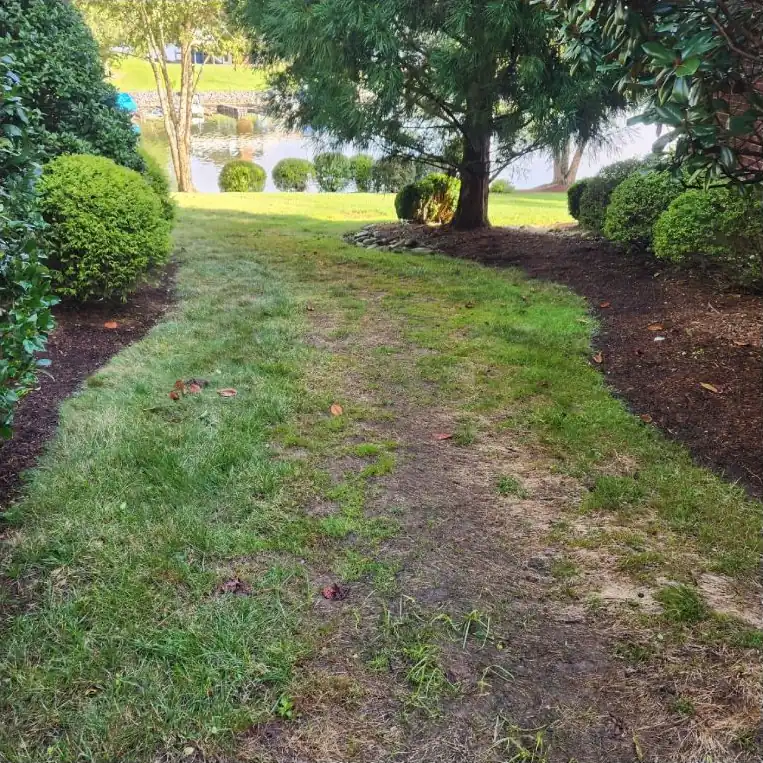
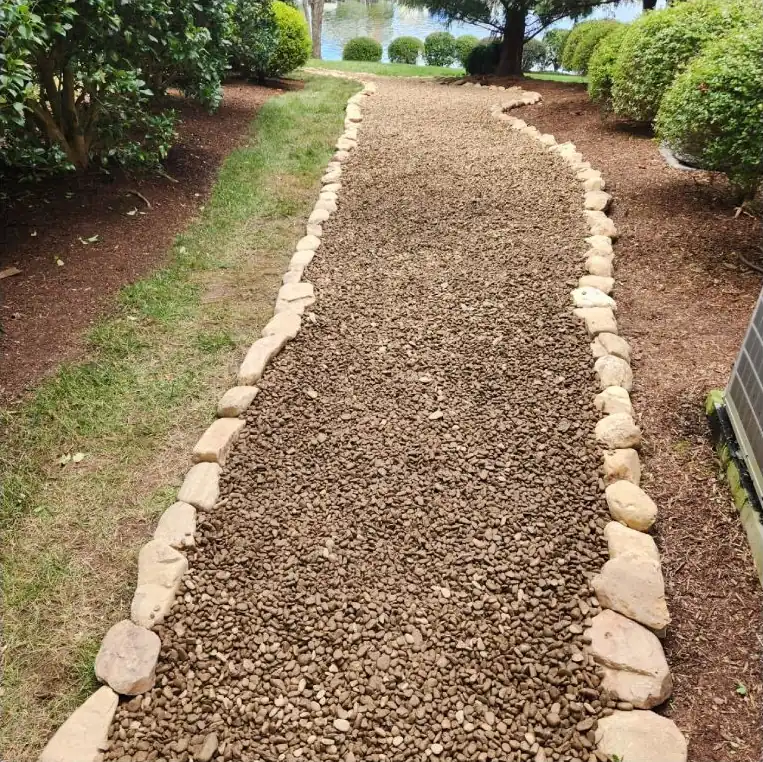
From a worn strip of grass to a walkway
Before, this was a strip of lawn worn down to dirt between two beds. The grass came out, the path was cut to shape, and river rock set along both edges keeps the gravel from wandering into the beds.
Questions we get
Do you give free estimates?
Yes. We'll come out, look at the space and talk through what it needs. Estimates are free in every town we serve, from Hickory, Conover and Newton out to Sherrills Ford, Denver, Taylorsville and Granite Falls.
Why pavers instead of a concrete slab?
A slab is one piece, so when the ground under it moves, it cracks. Pavers are separate pieces on a flexible base. They can move a little without cracking, and a section can be lifted and relaid if it ever needs it.
How long does a patio take to build?
It depends on the size, how easy the yard is to get equipment into, and how much digging the site needs. We'll give you a timeline along with your estimate.
Can you build a fire pit on my existing patio?
Often, yes, if the patio underneath is sound. If it's already settling, we'll tell you before we build anything on top of it.
Are you insured?
Yes. Quality Greens is insured, and we've been doing this work for over 10 years.
Thinking about a patio?
Tell us what you have in mind. The estimate is free.